Introduction: RAM is Expensive, Data is Overflowing
In-Memory Databases (MMDB) offer peak performance by eliminating disk I/O, but they have a fatal flaw: the high cost and volatility of DRAM. Loading petabytes (PB) of exploding data entirely into DRAM is economically nearly impossible. The solution emerging as a key trend in 2025 IT infrastructure is the Hybrid Main Memory Database (Hybrid MMDB). This post delves into the technical principles of hybrid architecture, which combines DRAM, SSD (NVMe), and next-generation memory like CXL to reduce costs by 90% while maintaining performance.
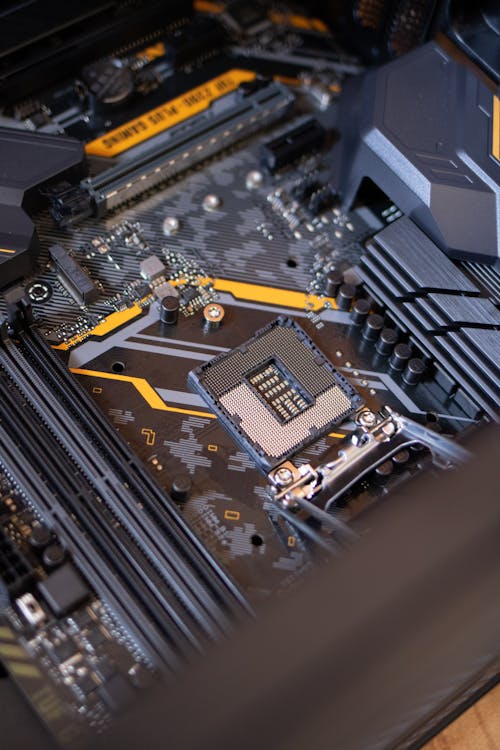
Deepening Core Principles: Anti-Caching and Cold Data Management
The core of Hybrid MMDB lies not just in mixing storage devices, but in algorithms that detect the Temperature of Data in real-time for placement.
Anti-Caching Strategy
Unlike traditional DBs that cache data from disk to memory, Hybrid MMDB adopts the principle of keeping all data in memory but uses a reverse strategy of evicting the coldest data from memory to disk. This ensures that 99% of active transactions are still processed at in-memory speeds.
Utilization of NVMe SSD and PMEM (Persistent Memory)
While old HDDs were too slow for hybrid configurations, the advent of modern NVMe SSDs and Persistent Memory (PMEM) like Intel Optane has changed the game. Hybrid MMDBs utilize NVMe SSDs like slow RAM through their own page management techniques instead of OS swap when the DRAM Buffer Pool is full.
2025 Trend: The Rise of CXL (Compute Express Link)
The game changer in the 2025 database market is undoubtedly CXL Memory. Previously, there was a physical limit to the DRAM capacity per CPU, but CXL technology using the PCIe interface allows server memory capacity to scale infinitely into terabytes (TB). This means Hybrid MMDB is no longer a 'compromise' but is establishing itself as a 'standard architecture' for large-scale AI models and big data analytics.
Practical Application: Redis on Flash Use Case
Even Redis, the most popular in-memory DB, offers a Redis on Flash (RoF) feature in its enterprise version. This method stores Values on SSD while keeping Keys and hot data in RAM.
- Application Scenario: By setting a policy to store user session info or real-time rankings 100% in RAM, while moving log data older than a week or large media metadata to SSD, infrastructure costs can be reduced by over 60%.
Expert Insight
💡 Database Engineer's Note
Tip for Tech Adoption: Before adopting Hybrid MMDB, you must analyze the 'Locality of Data Access'. If the workload involves uniform random access to all data, frequent page swaps might result in worse performance than a pure disk DB. It is most effective for datasets where the 80:20 rule (Pareto Principle) applies.
Future Outlook: In the future, 'Autonomous Tiering' technology, where the DB engine automatically understands hardware characteristics and moves data between CXL memory, HBM (High Bandwidth Memory), and SSDs, will become the standard.

Conclusion: How to Catch Two Rabbits - Cost and Performance
Hybrid MMDB is not just a technology trend but a survival strategy to control exploding cloud costs. If you cannot afford the luxury of putting all data into RAM, you must adopt an intelligent architecture that identifies data temperature and places it in the right place. Advancements in CXL and NVMe SSDs will make this hybrid architecture even more powerful, and engineers who leverage this well will take the lead in next-generation data infrastructure.